
Drilling a hole through a concrete wall sounds simple until you actually have to do it. Concrete is hard for a reason. It is made to withstand pressure, weather, impact and years of use, so ordinary drilling equipment is not always up to the job.
There are plenty of reasons why an existing concrete wall may need an opening. A plumber might need room for a pipe, an electrician may need to run a conduit, or a mechanical contractor may need an opening for an air-conditioning system. In larger building projects, several penetrations may be required in the same wall.
This is where professional concrete wall drilling makes a difference. Instead of breaking away large areas of concrete and hoping for a suitable opening, specialist equipment can produce a hole to the required size with much better control.
What Is Concrete Wall Drilling?
Concrete wall drilling is the process of making a controlled opening through a concrete wall using specialist drilling equipment. The equipment used depends on the size of the hole, the depth of the wall and the type of concrete being drilled.
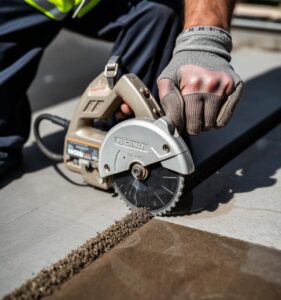
For many construction jobs, diamond core drilling is the preferred method. A hollow, diamond-tipped core bit cuts through the concrete and removes a cylindrical section. The result is a neat opening with much less damage around the edges than rough breaking or hammering.
The method is suitable for both small and large penetrations. It can also be used on reinforced concrete, although additional planning is required where steel reinforcement is present.
Why Do Concrete Walls Need to Be Drilled?
A building’s services do not always follow the same layout throughout its life. Renovations, extensions and changes to equipment can mean that new pipes, cables or ducts have to pass through walls that were already constructed.
For example, a new air-conditioning unit may require a wall penetration for pipework. A bathroom renovation might involve new plumbing. A commercial fit-out could require several openings for electrical or mechanical services.
Rather than removing a large section of the wall, concrete wall drilling creates the opening where it is actually needed. This saves unnecessary demolition and gives the contractor working afterwards a much cleaner starting point.
Where Is Concrete Wall Drilling Used?
The size and position of the hole will depend on what needs to pass through the wall. A small electrical conduit obviously requires a different approach from a large ventilation duct.
Common applications include:
- Plumbing and drainage penetrations
- Electrical conduits and cable routes
- Air-conditioning pipework
- Ventilation and mechanical services
- Anchors and structural fixings
- Fire service installations
- Renovation and refurbishment work
- Commercial construction projects
The job is often part of a larger sequence of work. The drilling contractor creates the opening, then another trade installs the pipe, cable, sleeve or other service. Accuracy therefore matters because even a small error in position can make the following installation harder.
Why Diamond Drilling Is Used on Concrete
Diamond drilling is different from the type of drilling most people use around the house. Instead of relying mainly on impact, a diamond core bit cuts its way through the concrete.
The diamond segments on the cutting edge are extremely hard and can gradually wear through concrete and, where appropriate, reinforcement. This makes the method suitable for jobs where a clean and accurately positioned hole is important.
Water is often used during wet core drilling. It helps keep the cutting equipment cool and controls the amount of airborne dust produced during the work.
For a contractor, the benefit is not just speed. The controlled cutting action means there is less unnecessary damage around the opening, which can save time when the next stage of the project begins.
Concrete Core Drilling and Conventional Drilling Are Not the Same
A conventional masonry drill has its place. Small holes for wall plugs, fixings and similar jobs can often be made with standard equipment.
The situation changes when a larger opening is needed. Trying to create a large penetration with ordinary drilling equipment can take considerably longer and may leave an uneven or damaged opening.
Concrete core drilling is designed specifically for this type of work. The hollow bit removes a round section of material, leaving an opening that is generally much cleaner and easier to use.
This is particularly useful when the hole has to accommodate a pipe, duct or sleeve. The opening can be planned around the dimensions required by the installation rather than enlarged afterwards by breaking away more concrete.
Drilling Through Reinforced Concrete
Reinforced concrete contains steel bars or other reinforcement within the concrete. That reinforcement gives the wall additional strength, but it also means drilling needs to be approached carefully.
Before concrete wall drilling begins on reinforced concrete, the location should be assessed. Existing drawings, information from the builder or suitable scanning equipment may help identify reinforcement and other concealed elements.
The structural importance of the wall also needs to be considered. A wall that forms part of a building’s structure should not be drilled simply because there appears to be enough room for a hole.
The Australian Building Codes Board’s National Construction Code contains structural provisions covering concrete construction and structural resistance. Where structural concrete is involved, the drilling work should therefore be coordinated with the relevant builder, engineer or project professional.
Choosing the Right Hole Size
One of the first questions on any drilling job should be: what is the hole actually for?
A pipe needs enough clearance for installation. A conduit may require only a relatively small opening. A ventilation system can require a considerably larger penetration, particularly where ductwork is involved.
It is better to establish these measurements before drilling begins. Enlarging an opening later can create extra work and may not be possible if the surrounding area has already been finished.
The thickness of the wall matters as well. A shallow penetration and a hole passing completely through a thick reinforced wall place very different demands on the equipment.
| Project Requirement | Main Consideration | Common Drilling Method | Result |
|---|---|---|---|
| Small service opening | Accurate positioning | Diamond drilling | Neat penetration |
| Pipe penetration | Correct diameter | Core drilling | Round opening |
| Large duct opening | Diameter and access | Large-diameter core drilling | Controlled opening |
| Thick concrete | Drilling depth | Specialist core drilling | Full-depth penetration |
| Reinforced concrete | Steel reinforcement | Diamond core drilling | Controlled cutting |
| Multiple holes | Consistent measurements | Planned core drilling | Uniform penetrations |
| Renovation work | Existing finishes | Low-impact drilling | Reduced surrounding damage |
What Should Be Checked Before Drilling?
The drilling point should never be selected simply because it looks convenient.
The wall’s construction, thickness and purpose should be established first. If plans or drawings are available, they can provide useful information about reinforcement and existing services. In some situations, scanning may also be appropriate before drilling.
The surrounding area should be considered too. Pipes, electrical wiring, ducts and other services can be hidden inside walls and are not always visible from the outside.
Access is another practical issue. Specialist drilling equipment needs to be positioned securely, and the available working space can affect which equipment is suitable for the job.
Taking a few minutes to assess these details before concrete wall drilling can prevent much bigger problems later.
How Dust Is Managed During Concrete Drilling
Concrete dust is an important consideration on any drilling site. Dry cutting can release fine particles into the surrounding air, particularly when a large amount of concrete is being removed.
Wet drilling is commonly used to keep the cutting area damp and reduce airborne dust. Depending on the location and equipment, other dust-control measures may also be used.
This becomes particularly important when drilling inside an occupied property. Homes, offices, shops and industrial premises may have people working nearby, so the drilling operation should be planned around the site rather than treating dust as an afterthought.
Good site preparation also makes the clean-up process easier once the drilling is complete.
Noise and Vibration During Drilling
There is no completely silent way to drill concrete. However, the amount of noise and vibration can vary considerably depending on the equipment and method used.
Controlled diamond drilling is different from heavy demolition with impact tools. Instead of repeatedly smashing the concrete, the cutting action gradually removes the required section.
This can be useful in buildings where excessive vibration would be undesirable. It can also make the job easier to manage when drilling takes place close to finished surfaces or other sensitive areas.
The working hours may need to be planned carefully for commercial properties, apartment buildings and occupied premises.
Concrete Wall Drilling for Plumbing
Plumbing installations are one of the common reasons for creating new penetrations through existing concrete walls.
A renovation may require a new water line, drainage connection or other pipework to pass from one area of the building to another. The required opening needs to be large enough for the pipe and installation method without creating an unnecessarily large hole.
Accurate drilling is useful here because the plumber can work from a properly positioned penetration rather than having to modify a rough opening.
Where several pipes are being installed, the location of each opening should ideally be considered as part of the overall service layout.
Concrete Drilling for Electrical Services
Electrical work can also require openings through concrete. Conduits, cables and other installations may need to pass between rooms or through external walls.
The hole required is usually smaller than the opening needed for a major mechanical system, but accuracy still matters. The penetration needs to be located correctly and should not interfere with other services or structural components.
For renovation projects, drilling can be a much cleaner option than opening up an entire section of concrete just to create a route for one conduit.
Drilling for Air Conditioning and Ventilation
Modern buildings often have air-conditioning and ventilation systems that require wall penetrations.
These openings can be relatively large, particularly where ductwork is involved. The size of the penetration also means that careful positioning is important because the opening can be difficult to hide or alter once it has been created.
With concrete wall drilling, the contractor can work to the dimensions supplied for the mechanical installation. This gives the HVAC contractor a much more usable opening when fitting the system.
On external walls, the finished penetration may also need appropriate sealing or weatherproofing as part of the installation.
Why Accuracy Matters
It is easy to think that a hole in a concrete wall only needs to be approximately the right size. In practice, small differences can cause problems.
If the opening is too close to another service, there may not be enough room for installation. If it is in the wrong position, pipework or ducting may have to be rerouted. If the opening is larger than necessary, additional finishing work may be required.
Accurate concrete wall drilling avoids much of this unnecessary work. The drilling contractor can work from the measurements and position provided for the project.
Benefits of Using a Specialist Drilling Contractor
Concrete drilling equipment is powerful, but equipment alone does not make a successful job. The operator needs to understand how the equipment behaves, how the wall is constructed and what needs to happen after the opening is created.
A specialist contractor can also recognise practical issues before they become expensive mistakes. Wall thickness, reinforcement, access, dust, water management and surrounding finishes all need to be considered.
For larger projects, this experience can save time for everyone involved. The builder gets the required opening, and the following trade can continue without having to repair or reshape a poorly made penetration.
When Professional Drilling Is the Better Choice
A small hole for a household fixing is one thing. Drilling through a structural concrete wall for a large pipe is something completely different.
Professional concrete wall drilling is the safer and more practical option when the wall is reinforced, the opening is large, the concrete is particularly thick or the work forms part of a commercial construction project.
It is also worth getting specialist help when the location of reinforcement or existing services is uncertain. Guessing where concealed elements are located can turn a straightforward job into a costly repair.
For structural elements, the appropriate project professional should confirm that the proposed penetration is acceptable before drilling takes place.
How to Choose a Concrete Drilling Contractor
Price is important, but it should not be the only thing considered when choosing a drilling contractor.
Ask whether the contractor has handled similar concrete work before. It is also worth discussing the wall thickness, required hole diameter, access and purpose of the opening before the job is booked.
A contractor who asks sensible questions about the site is usually in a better position to provide an accurate quote. They should also be able to explain the proposed method without making the process unnecessarily complicated.
For commercial work, reliability and coordination matter just as much as the drilling itself. A delay at the drilling stage can hold up several other trades.
Preparing for a Concrete Drilling Job
Before the contractor arrives, make sure the required hole locations are clearly identified. Measurements should be confirmed with the trade that will use the opening.
If building plans, structural drawings or information about concealed services are available, keep them ready. They may help the drilling contractor understand what is behind the wall before work starts.
It is also useful to clear furniture, equipment and other items from the immediate work area. Good access gives the operator more room to position equipment and protect the surrounding area.
These are simple steps, but they can make concrete wall drilling much more straightforward.
Get Professional Concrete Drilling for Your Project
Concrete is not a material that should be attacked with whatever equipment happens to be available. The right drilling method depends on the wall, the size of the opening and what the penetration is intended to achieve.
For plumbing, electrical work, ventilation, air conditioning and construction projects, controlled drilling can create a clean opening while avoiding unnecessary damage to the surrounding concrete.
If you need concrete wall drilling, it is worth discussing the job with an experienced specialist before work begins. The correct equipment, accurate measurements and proper preparation can make the difference between a clean penetration and a repair job that creates more work than expected.
For professional concrete drilling and cutting solutions, contact Rapid Sawing & Drilling to discuss your requirements and request a quote. You can view the company’s concrete cutting and drilling services or use the contact page to enquire about your project.
Conclusion
Concrete wall drilling is a useful part of modern construction and renovation work, particularly when new services need to pass through an existing structure. The job may look straightforward from the outside, but the wall construction, reinforcement, services and required opening all need to be considered first.
Using the right drilling method helps produce a more accurate opening and reduces unnecessary damage around the work area. It also gives plumbers, electricians and other trades a cleaner starting point for their part of the project.
If you have a concrete wall that needs a precise opening, speak with Rapid Sawing & Drilling before starting the work. A proper assessment can help determine the most suitable drilling method, equipment and preparation for the job.
Frequently Asked Questions
1. What is concrete wall drilling used for?
Concrete wall drilling is used to create openings for pipes, electrical conduits, air-conditioning lines, ventilation ducts, anchors and other building services. The drilling method depends on the required hole size, depth and wall construction.
2. Can reinforced concrete walls be drilled?
Yes. Specialist diamond drilling equipment can cut through reinforced concrete. However, reinforcement and other concealed elements should be considered before work begins, particularly when the wall has a structural function.
3. Is diamond core drilling suitable for large holes?
Yes. Diamond core drilling is commonly used for larger circular penetrations because it removes a cylindrical section of concrete and produces a relatively clean, controlled opening.
4. How can concrete drilling dust be controlled?
Wet drilling can help suppress airborne dust and cool the cutting equipment. Other dust-control measures may also be appropriate depending on the equipment, location and conditions on the site.
5. Do I need approval before drilling a concrete wall?
It depends on the property and the nature of the work. If the wall is structural or the drilling forms part of regulated building work, the project should be checked with the relevant builder, engineer or authority before drilling begins.