Changing an existing concrete wall is rarely a job that can be handled with guesswork. A builder might need a new doorway. A renovation could require a larger window opening. There may be a service penetration to make, or part of an old structure may have to be removed before the next stage of construction can begin.
The difficult part is that concrete does not forgive inaccurate work. Once a section has been cut away, putting it back is not a simple matter. That is why the cutting method matters as much as the measurements.
Concrete wall sawing provides a controlled way to cut through vertical concrete surfaces. Rather than relying on repeated impact to break the material apart, a diamond blade follows a planned line and separates the required section. The result can be a much more predictable opening, particularly when the dimensions and position of the cut are important.
Rapid Sawing & Drilling describes wall sawing as a method suited to vertical or angled concrete cuts, including controlled openings during renovations and commercial construction.
What Is Concrete Wall Sawing?
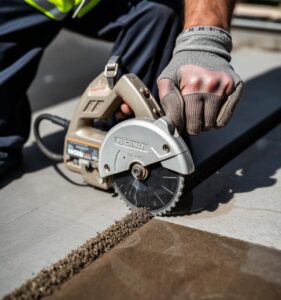
Concrete wall sawing involves using specialist cutting equipment to make straight cuts through a concrete wall or similar vertical surface. The equipment is positioned securely, and a diamond blade is guided along the required cutting line.
Diamond cutting is useful because concrete can be extremely dense and may contain steel reinforcement. Ordinary cutting tools are not designed for this sort of work. Professional concrete cutting equipment is built specifically for demanding materials and substantial construction surfaces.
The work starts well before the blade touches the wall. The contractor needs to understand the required opening, the wall thickness, access around the work area and the condition of the concrete. Reinforcement and existing services may also need to be considered.
That preparation helps determine how the cut should be made and what equipment is appropriate for the particular site.
Where Is This Type of Cutting Used?
There is no single type of project that requires wall cutting. The need often appears when an existing building is being changed rather than when a new building is being constructed.
For example, a renovation contractor may need to remove part of a wall to create an opening between two rooms. A commercial property may require a new access point after a change in its internal layout. Mechanical or electrical work can also involve making carefully positioned openings through concrete.
In some cases, the opening is relatively small. Other jobs involve substantial sections of reinforced concrete and require more planning, equipment and coordination.
Common applications include:
- New door and window openings
- Service and utility penetrations
- Commercial refurbishment work
- Building alterations and extensions
- Access openings in concrete structures
- Controlled concrete removal
- Mechanical installation work
- Electrical and plumbing modifications
The important point is that the cutting method should suit the actual job rather than simply being chosen because it worked on another project.
Why Accuracy Matters
A concrete opening is often only one part of a larger construction process. Once the cut has been completed, another trade may need to install something into the opening.
Consider a new doorway. The carpenter or builder needs the opening to match the agreed dimensions. If the cut is too small, more work is needed. If it is larger than required, the difference cannot simply be undone.
The same applies to service openings. A plumber, electrician or mechanical contractor may have already planned the location and dimensions of the penetration. An inaccurate cut can create delays and additional repair work.
This is one reason experienced operators spend time setting out the job before starting the saw. The blade is only one part of the process. Measurements, access, cutting sequence and removal all contribute to the final result.
How the Process Usually Works
Every site has its own conditions, but the basic process follows a sensible sequence.
First, the cutting contractor reviews the work area. They need to know what is being cut, how much material needs to be removed and how the surrounding space will be protected.
The proposed opening is then marked out. Measurements should be checked before cutting begins, particularly when another trade will rely on the finished dimensions.
Equipment is positioned according to the site conditions. Depending on the job, the cutting system may be mounted or otherwise secured so that the blade can follow the planned path without unnecessary movement.
The operator then works through the concrete in a controlled manner. The exact cutting sequence depends on the wall, depth, reinforcement and size of the section being removed.
Once the required cuts have been completed, the separated concrete needs to be handled carefully. Large pieces can be heavy, so removal and access arrangements should form part of the original plan rather than being treated as an afterthought.
What Needs to Be Checked Before Cutting?
A wall may look straightforward from the outside, but there can be much more happening inside it.
Concrete walls can contain reinforcement, embedded services or structural components that are not visible from the surface. Existing drawings can be helpful, but they should not automatically be treated as a complete picture of current site conditions.
Access is another practical issue. Cutting equipment needs enough room to be positioned and operated properly. If the work is inside an occupied building, the contractor may also need to consider nearby rooms, furniture, equipment and pedestrian movement.
The proposed opening should also be discussed with the relevant builder, engineer or project manager where structural changes are involved. The cutting contractor handles the cutting process, but the wider project may require other professionals to confirm what can safely be removed.
Concrete Wall Sawing and Reinforced Concrete
Reinforcement changes the nature of a cutting job. Steel bars are commonly incorporated into concrete structures to provide strength, so cutting through reinforced concrete requires equipment and experience suited to the material.
The presence of reinforcement can affect cutting speed and the sequence used to complete the opening. It can also influence the equipment selected for the project.
This is particularly relevant when the wall is part of a structural system. A contractor should not assume that because a section can physically be cut, it should automatically be removed.
The purpose of the opening and the condition of the structure need to be understood first. Where engineering approval or structural advice is required, that should be obtained before the cutting begins.
Dust, Water and Site Cleanliness
Concrete cutting is not simply a matter of making a line in the wall and walking away. The work environment needs attention as well.
Cutting concrete can generate silica-containing dust. Safe Work Australia specifically identifies brick, concrete and stone cutting, particularly dry cutting, as activities that can generate respirable crystalline silica dust.
The same guidance recommends using appropriate controls to reduce exposure. Depending on the circumstances, this can include water suppression, dust extraction, isolation and suitable respiratory protective equipment.
For Australian workplace information, the Safe Work Australia silica guidance provides further information about managing this hazard.
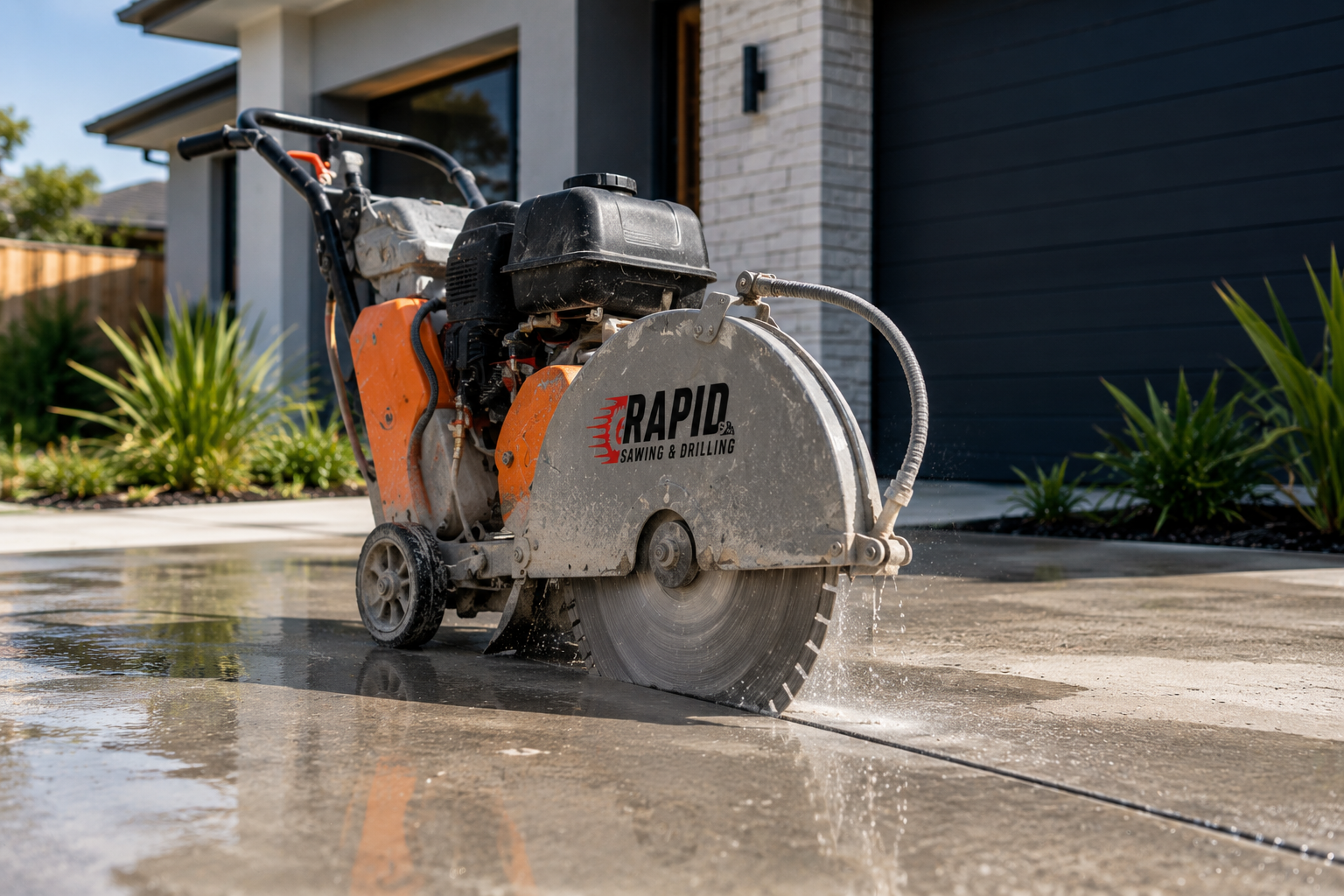
Water can also create its own housekeeping issue. Slurry should be controlled and collected rather than allowed to spread through the work area. The approach will depend on the location, equipment and site requirements.
One Practical Site Checklist
Before the saw arrives, it is worth confirming a few basic details with the project team:
- Confirm the exact opening dimensions and location.
- Check access for equipment, operators and concrete removal.
- Identify known services and relevant structural information.
- Decide how dust, water, slurry and debris will be controlled.
- Confirm who is responsible for removing the cut concrete.
- Coordinate the cutting time with the trades that follow.
Getting these points sorted early can save considerable time once work starts.
Wall Sawing Compared With Breaking Concrete
Breaking concrete and sawing concrete are not interchangeable methods.
A jackhammer or similar impact tool works by repeatedly striking the material until it fractures. That can be useful when the goal is simply to break concrete into manageable pieces.
A saw takes a different approach. It creates a defined separation along a selected line. That distinction becomes important when an opening needs to have reasonably precise edges and dimensions.
For example, breaking away a large area of concrete may be appropriate during demolition. Creating a neat opening for a new doorway is a different requirement.
The project determines which approach makes sense. In some situations, both methods may be used. Sawing can establish controlled boundaries, while other equipment can assist with removing the section inside those boundaries.
Choosing the Right Cutting Contractor
The cheapest quote is not necessarily the easiest quote to work with. Before choosing a contractor, look at whether the company understands the actual requirements of the project.
Ask about the wall thickness, expected cutting depth, access arrangements and reinforcement. If you already have drawings or measurements, provide them. Photographs of the work area can also help when discussing the job before an on-site assessment.
It is useful to explain what happens after the wall is cut. If a door, window, duct, cable tray or pipe is going into the opening, the finished dimensions matter.
A contractor who understands the next stage of the job can plan the cutting accordingly.
Rapid Sawing & Drilling provides concrete cutting, wall cutting and other specialist concrete services for residential, commercial and civil projects. Its published service information notes that each project is assessed according to factors such as access, concrete depth, reinforcement and surrounding conditions.
Preparing for a Concrete Cutting Job
Property owners and builders can make the process easier by preparing the area before the cutting crew arrives.
Remove loose items from the immediate work zone and make sure there is a practical route for equipment and workers. If the project is inside a finished property, discuss protection for floors, nearby surfaces and access paths.
The cutting contractor should also know about restrictions that could affect the work. For example, limited access, occupied areas or strict working hours can change how the job is organised.
If the opening forms part of a renovation, make sure the other trades know when the cutting will take place. There is little benefit in creating an opening quickly if the next contractor cannot access the site for another week.
Good scheduling is often a simple matter of communication.
Residential, Commercial and Civil Work
The requirements for a small residential alteration can be very different from those of a large commercial project, but the basic principle remains the same: the cut needs to be planned around the site.
At home, wall cutting may form part of a renovation, extension or property alteration. The work may be limited to one opening, but cleanliness and access can become particularly important because the building may still be occupied.
Commercial projects often involve several contractors working within a tight program. A delay in one stage can affect everything that follows.
Civil projects can bring additional requirements around access, traffic, scheduling and site coordination. The cutting contractor needs to understand those conditions before the work begins.
Rapid Sawing & Drilling states that its concrete cutting work covers residential, commercial and civil applications, including wall cutting for doorways, windows, access points and service openings.
Why Professional Equipment Makes a Difference
Concrete is not a material where improvised tools are a sensible substitute for specialist equipment. A large wall can contain considerable mass and reinforcement, while the cutting environment can present its own challenges.
Professional equipment allows the operator to approach the job according to the required cut rather than simply forcing a tool through the material.
Experience matters too. Two walls may have similar dimensions but completely different site conditions. One might have easy access and clear working space. Another might be inside a busy commercial building with restricted movement and strict working hours.
The contractor needs to adapt the method to the site.
That is ultimately what good concrete wall sawing is about: making the required cut while taking the surrounding project into account.
Conclusion
A concrete wall may look simple from the outside, but cutting one properly requires planning. The position of the opening, wall thickness, reinforcement, access, dust management and removal process all have a bearing on the work.
Concrete wall sawing is particularly useful when the project calls for a controlled, accurately positioned cut rather than uncontrolled breaking. It can support renovations, commercial alterations, service installations and other construction work where the finished opening needs to match the project requirements.
If you are planning a concrete modification, start by getting the measurements and site conditions clearly understood. From there, an experienced cutting contractor can determine the appropriate equipment and approach.
For specialist concrete cutting and wall sawing services, Rapid Sawing & Drilling can assess your requirements and help plan the work around your project. Contact the team today to discuss your concrete cutting requirements and request a quote.
Frequently Asked Questions
1. What is concrete wall sawing used for?
Concrete wall sawing is commonly used to create controlled openings in vertical concrete surfaces. Typical applications include doorways, windows, access points, service openings and building modifications.
2. Can concrete wall sawing be used on reinforced walls?
It can be used on reinforced concrete when suitable specialist equipment and cutting methods are selected. The amount and position of reinforcement should be considered before the work begins.
3. Does cutting concrete create silica dust?
Yes. Concrete cutting can generate respirable crystalline silica dust, particularly when dry methods are used. Safe Work Australia recommends appropriate controls to reduce worker and other people’s exposure.
4. How much does wall sawing cost?
There is no single price because each job is different. Wall thickness, cut dimensions, reinforcement, access, equipment requirements, site conditions and the amount of concrete being removed can all affect the final cost. A site-specific quote is more useful than a generic price.
5. How can I arrange a concrete cutting job?
Provide the contractor with the wall location, approximate dimensions, required opening and any available drawings or photographs. For project enquiries, you can contact Rapid Sawing & Drilling and discuss the requirements with the team.