An old concrete slab can look like the easiest part of a renovation. It is already there, it needs to go, and the new work cannot start until the area is clear. The temptation is to get the demolition underway as quickly as possible.
That approach can cause problems if the concrete sits close to a wall, covers a service line or connects to a section that must remain. A driveway beside a garage, for instance, needs a different plan from a freestanding concrete pad in an open yard.
This is where concrete demolition services become useful. The work involves more than breaking a hard surface into pieces. It requires an understanding of what is being removed, how the material can be accessed and what condition the area needs to be in afterwards.
For a homeowner, the priority might be replacing a damaged path. A builder may need a clear area for an extension. An industrial site might require part of a reinforced floor removed before new equipment is installed. Each job has a different purpose, and that purpose should guide the removal method.
What Usually Makes Concrete Demolition ServicesNecessary?
Concrete is built to last, but there are times when keeping the existing surface no longer makes sense.
Replacing a Damaged Driveway
A driveway may develop uneven sections, deep cracks or areas that have settled over time. If the damage is extensive, removal may be necessary before a replacement surface can be installed.
It is worth checking why the damage occurred. Poor drainage or movement in the base can affect a new driveway as well. Removing the old concrete does not automatically correct what lies underneath it.
Making Room for Renovation Work
Changes inside a property can involve concrete removal even when the rest of the building remains in good condition. A bathroom renovation may require access beneath the floor, while a commercial fit-out could involve changes to drainage or equipment layouts.
The main concern is the boundary of the work. Concrete that needs to remain should be protected from unnecessary disturbance, especially when it joins finished surfaces.
Clearing Land for Construction
An existing slab, pathway or concrete pad can stand in the way of new building work. Before foundations, landscaping or other construction can proceed, the unwanted material may need to be removed.
The demolition schedule should fit around the other trades. If an excavation team is booked for the following morning, the area needs to be accessible and the removal sequence must be realistic.
Removing Reinforced Concrete
Reinforced concrete contains steel that helps the material withstand loads. This makes it useful in construction, but it can add complexity when the structure needs to be dismantled.
The thickness of the concrete, the amount of reinforcement and the position of the structure all influence the method. Some jobs require a combination of cutting, breaking and mechanical removal.
A Demolition Job Starts With a Site Assessment
The dimensions of a slab are helpful, but they do not tell the whole story. A contractor also needs to consider where the concrete sits, how equipment can reach it and what is likely to be beneath or around it.
Take a narrow driveway running between a house and a boundary fence. A large excavator might be suitable for the concrete itself, but there may not be enough room to position it safely. A different method or a staged approach could be more appropriate.
Underground services are another consideration. Water pipes, electrical conduits and drainage lines may run beneath areas that appear to be ordinary concrete. Available plans can help, although additional checks may be needed before the ground is disturbed.
The assessment should also establish what the client expects at the end. Removing a slab and leaving a cleared area are not necessarily the same as preparing the ground for a new installation.
Choosing How the Concrete Will Be Removed
The method depends on the job, not simply the size of the machine available.
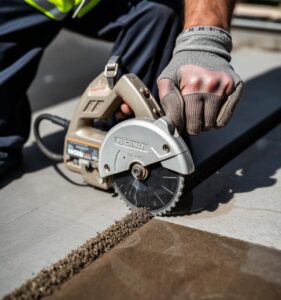
Small areas may be suitable for hand-held breaking equipment. Larger slabs can require machinery capable of handling heavier sections. Where the remaining concrete needs a defined edge, saw cutting may be used before breaking begins.
The contractor also needs to think about the pieces being removed. Large sections can be difficult to handle in restricted spaces, while breaking everything into very small fragments can increase the time spent on handling and loading.
A practical removal sequence takes account of both the concrete and the route it needs to travel from the work area to the transport vehicle.
Comparing the Main Methods
| Method | Where it may be suitable | What to consider |
|---|---|---|
| Hand-held concrete breaking | Small paths and limited sections | Labour, noise and access |
| Excavator-mounted breaking | Large slabs and substantial concrete areas | Machinery access and vibration |
| Saw cutting before removal | Sections requiring defined edges | Cut depth and nearby surfaces |
| Wall sawing | Suitable vertical concrete structures | Structural requirements and equipment setup |
| Mechanical lifting and removal | Concrete sections that can be safely separated | Section weight and lifting arrangements |
These methods can work together. For example, a contractor might cut around a section of concrete flooring before breaking it into pieces for removal. The purpose is to use a method that suits the site while keeping the work within the intended area.
What Can Affect the Quote?
Clients often compare demolition quotes by looking at the total price first. It is just as important to compare what each quote includes.
A small slab in an open area may be relatively straightforward to access. A similar-sized slab inside a building could take longer if machinery cannot reach it easily or if surrounding surfaces need extra protection.
The following factors can affect the cost:
- Concrete dimensions: Thickness and overall size influence the amount of material to be broken and handled.
- Reinforcement: Steel bars or mesh may require additional cutting and separation.
- Access: Narrow passages, steps and restricted entry points can affect equipment choice.
- Nearby structures: Work close to walls, foundations or retained concrete may need a more controlled method.
- Waste removal: Loading, transport and disposal arrangements contribute to the overall scope.
- Site preparation: The area may require additional excavation or levelling once the concrete is gone.
When requesting a quote, explain the work in plain terms. Include the location, approximate measurements, access restrictions and what should happen after removal. Photographs can help the contractor understand the site before an inspection.
Ask whether concrete waste removal and final clean-up are included. A lower quote may not cover the same tasks as a more comprehensive one.
Safety Is Part of the Removal Plan
Breaking concrete can produce noise, flying fragments, vibration and airborne dust. These risks need to be considered alongside the equipment and removal sequence.
Silica dust deserves particular attention. Certain concrete cutting, drilling and breaking activities can release respirable crystalline silica, which can cause serious lung disease when inhaled.
Safe Work Australia explains the hazard and relevant controls in its silica safety guidance. Depending on the task, controls may include wet methods, suitable dust extraction, restricted access and appropriate respiratory protective equipment.
The work area also needs to be managed. Workers should understand where machinery will operate, where concrete pieces will be placed and how material will be moved out of the site.
If demolition takes place near occupied homes or commercial premises, noise and access arrangements may need to be discussed in advance. Water and slurry used during controlled cutting also require proper management.
What Happens After the Concrete Is Removed?
This is a detail worth settling before the job begins.
A builder preparing for a new foundation may need the area excavated to a particular level. A homeowner replacing a path may simply require the old concrete removed and the area left tidy. An industrial project could require additional checks before machinery installation proceeds.
The demolition contractor and client should agree on the expected finish. Otherwise, one person may assume that loading and disposal are included while the other expects to organise a separate waste collection.
The next trade should also know when the area will be available. Good scheduling can prevent a cleared site from sitting unused while another contractor waits for access elsewhere.
Mistakes That Can Create Extra Work
Some problems arise because the project is treated as a straightforward breaking job.
One example is overlooking a service line beneath the slab. Another is assuming that a machine can reach the concrete without checking the available space. Both issues can change the method and schedule once work has started.
It is also easy to underestimate the amount of waste. Broken concrete takes up space, and its removal needs to be considered alongside the demolition itself.
A final mistake is failing to identify the material that should remain. Where a slab joins a wall, path or another surface, the removal boundary needs to be clear before the work starts.
Before Work Begins: A Short Checklist
- Mark the sections that need to be removed.
- Provide available information about buried services.
- Check whether structural advice is required.
- Confirm how machinery and workers will access the area.
- Discuss dust, noise and site protection.
- Agree on who will load and remove the concrete.
- Confirm the condition required after demolition.
- Coordinate the work with the next stage of construction.
These checks are simple, but they can prevent avoidable misunderstandings once the equipment arrives.
Conclusion
Removing concrete is only one part of preparing a site. The work also needs to account for access, nearby structures, waste handling and the requirements of whatever comes next.
If you are planning a renovation or construction project, Rapid Sawing & Drilling can discuss your concrete removal requirements and the available options. Visit the services page for more information or use the contact page to make an enquiry.
Frequently Asked Questions
1. How long does concrete demolition take?
The timeframe depends on the dimensions, thickness, reinforcement, access and waste-removal requirements. A small path may take much less time than a large reinforced slab. A site inspection can provide a more reliable estimate.
2. Can reinforced concrete be removed?
Yes. Suitable breaking, cutting and handling methods can be used to remove reinforced concrete. The approach depends on the steel reinforcement, concrete thickness and surrounding structures.
3. Does a demolition quote include waste removal?
Not always. Some quotes include loading, transport and disposal, while others cover the removal work only. Confirm the scope before accepting a quote.
4. Is concrete cutting required before demolition?
No. Some areas can be broken directly. Cutting may be useful when the contractor needs a defined edge or wants to separate a section before removing it.
5. What information should I provide when requesting a quote?
Share the site location, approximate dimensions, photographs if available and a description of the intended work. Mention access restrictions and whether you need waste removal or further site preparation.