Concrete work is rarely as simple as making a hole or cutting through a slab. Before any section of concrete is removed, contractors need to consider the structure, surrounding services, access, depth and the type of cut required. A poorly planned cut can damage reinforcement, interfere with hidden utilities or create unnecessary delays on a construction site.
This is where professional cut and core services become useful. The combination of concrete cutting and core drilling allows contractors to create accurate openings, remove selected sections and prepare concrete structures for plumbing, electrical, mechanical and construction work.
Whether the project involves a small residential renovation, commercial refurbishment, roadwork or major structural alterations, precision matters. The right equipment and cutting method can make the work safer, cleaner and easier to control.
What Are Cut and Core Services?
Cut and core refers to two closely related concrete services: precision cutting and core drilling. Concrete cutting is generally used to create straight lines, sections or openings through slabs, walls, floors and other concrete structures. Core drilling, on the other hand, removes cylindrical sections of concrete to create accurately sized holes.
Professional cut and core work is often required when a project needs controlled alterations rather than broad concrete demolition. Instead of breaking apart a large area, contractors can remove only the concrete necessary for the job.
This approach can be particularly useful when working around existing structures or services where unnecessary vibration and uncontrolled breaking could create additional problems.
Why Precision Matters When Cutting Concrete
Concrete structures are often part of a larger building system. A slab may contain reinforcement, conduits, plumbing or other embedded components, while a wall may form part of the structural framework.
For this reason, simply cutting through concrete without proper planning can create unnecessary risks.
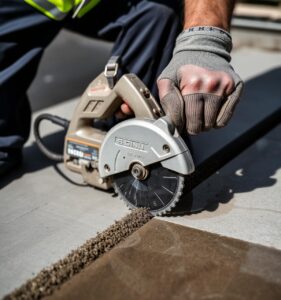
Professional concrete cutting uses specialised equipment to create controlled cuts according to the required dimensions. The exact technique depends on the thickness and position of the concrete, access conditions and the purpose of the cut.
Precision can also reduce the amount of unnecessary material that needs to be removed, which can make subsequent construction work easier.
How Core Drilling Fits Into The Process
Core drilling is used when a circular opening is required.
The process uses a diamond core bit to cut a cylindrical section from the concrete. The diameter and depth of the core can be selected according to the requirements of the project.
Diamond core drilling is commonly used for openings associated with plumbing, electrical systems, ventilation, drainage, mechanical services and other building installations.
For projects requiring particularly large openings, large diameter core drilling may be appropriate. The equipment and planning required will depend on the diameter, depth, reinforcement and surrounding conditions.
Cut and Core Compared With Traditional Concrete Breaking
Traditional concrete breaking can be useful for demolition, but it is not always the right approach when only a specific section needs to be removed.
Cutting and drilling provide greater control because the contractor can define the area that needs to be altered before removing the material.
| Service | Typical purpose | Main advantage | Common applications |
| Cut and core | Controlled cutting and circular drilling | Precise alterations | Construction, renovation and services |
| Concrete sawing | Straight cuts through concrete | Accurate linear cutting | Slabs, floors and structural sections |
| Core drilling | Circular openings | Accurate hole sizes | Plumbing, electrical and mechanical services |
| Wall sawing | Cutting through concrete walls | Controlled deep wall cuts | Doorways, openings and structural modifications |
| Slab sawing | Cutting concrete slabs | Precise floor cuts | Renovations, repairs and service installation |
| Road sawing | Cutting roads and pavements | Controlled surface cutting | Utility and civil construction |
| Concrete grinding | Surface preparation | Smooths or levels concrete | Flooring and coating preparation |
| Concrete removal | Removing selected concrete | Controlled material removal | Renovation and repair work |
| Concrete demolition | Larger-scale removal | Efficient structural removal | Building and demolition projects |
The correct service depends on the size, location and purpose of the work.
When Do You Need Cut and Core?
There are many situations where controlled cutting and drilling are more suitable than simply breaking concrete.
For example, a renovation may require a new drainage line through an existing slab. A commercial project may need multiple penetrations for mechanical services, while a structural alteration may require part of a concrete wall to be removed.
Professional cut and core contractors can assess the required opening and select the appropriate equipment and technique.
The goal is to remove or penetrate only what is required while maintaining control over the surrounding structure.
For practical guidance on maintaining your home and identifying issues such as cracks, damp and moisture problems, homeowners can refer to the Australian Government’s YourHome – Repairs and Maintenance resource.
Concrete Slab Cutting
Concrete slabs can be difficult to alter without the right equipment.
Concrete slab cutting may be required when installing plumbing, drainage, electrical services or other infrastructure beneath or through an existing slab.
The location and depth of the cut need to be planned carefully. Before cutting begins, contractors may also need to determine whether reinforcement or concealed services are present.
Slab sawing services are commonly used where long, controlled cuts are required through concrete floors and slabs.
Concrete Floor Sawing
Floor sawing is another form of controlled concrete cutting.
Concrete floor sawing can be used to create straight cuts through concrete floors, slabs, pavements and similar surfaces.
The technique is often useful during renovation and civil construction projects where a precise section needs to be opened or removed.
The required cutting depth, equipment and blade selection depend on the concrete and project requirements.
Concrete Wall Drilling
Concrete walls often require openings for pipes, cables, ventilation systems and other services.
Concrete wall drilling provides a controlled method for creating these openings without unnecessarily damaging the surrounding wall.
For circular penetrations, core drilling is usually the appropriate approach.
Where larger or non-circular sections need to be removed, other cutting techniques may be considered.
Diamond Wall Sawing
Some projects require a larger opening through a concrete wall.
Diamond wall sawing uses specialised diamond cutting equipment to create controlled cuts through concrete structures.
It can be useful when creating doorways, larger service openings or sections that need to be removed as part of a renovation or structural alteration.
Concrete wall sawing can provide a more controlled alternative to uncontrolled demolition when only a defined section of a wall needs to be removed.
GPR Concrete Scanning Before Cutting
One of the most important considerations before drilling or cutting is identifying what may be hidden inside the concrete.
Concrete can contain reinforcement, electrical conduits, plumbing and other embedded components.
GPR concrete scanning uses ground-penetrating radar technology to help identify objects and features within concrete before cutting or drilling takes place.
Scanning does not eliminate every risk, but it can provide valuable information that helps contractors plan the location of cuts and penetrations.
For projects where hidden services or reinforcement are a concern, scanning should be considered as part of the pre-cutting assessment.
Precision Core Drilling
Not every project requires the same type of core drilling.
Precision core drilling is particularly useful when the location and dimensions of an opening need to be controlled accurately.
The diameter, depth and position of the hole should be established before work begins.
This can be important when the opening needs to line up with a pipe, cable, duct or other service.
Accurate drilling can reduce the need for additional modification once the opening has been created.
Large Diameter Core Drilling
Standard core drilling is suitable for many service penetrations, but some projects require much larger openings.
Large diameter core drilling is used when a larger circular penetration is required through concrete.
The equipment and setup will depend on the size and depth of the hole and the type of concrete being drilled.
Large openings may also require additional planning for water management, access, reinforcement and removal of the core.
Concrete Drilling Services For Construction Projects
Modern construction projects often require numerous penetrations through existing concrete.
Concrete drilling services can be used for plumbing, electrical, mechanical, drainage, ventilation and other building requirements.
The contractor should understand the purpose of each penetration before selecting the drilling method.
This helps ensure the hole is created at the appropriate size and location rather than requiring unnecessary enlargement later.
Road Sawing And Civil Construction
Concrete is not the only material that may require precision cutting.
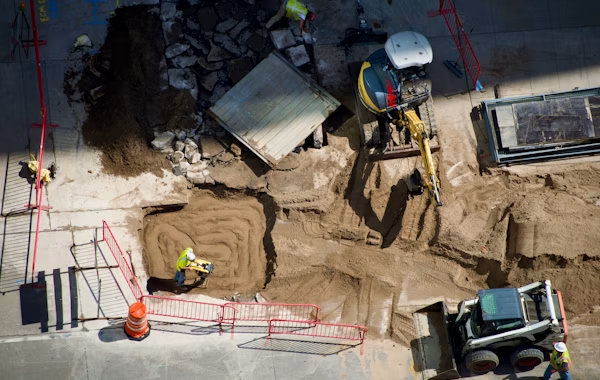
Road sawing is commonly used during civil and infrastructure work where sections of pavement or road surfaces need to be cut accurately.
The technique can help create controlled sections for utility installation, repairs and other roadwork.
Similarly, asphalt saw cutting may be required where the road or surface consists of asphalt rather than concrete.
The correct blade and equipment depend on the material and cutting requirements.
Expansion Joint Cutting
Concrete naturally experiences changes caused by temperature, drying and movement.
Expansion joint cutting can be used to create planned joints that help accommodate movement in appropriate concrete applications.
Without suitable joint planning, uncontrolled cracking can occur as the concrete changes over time.
The location, depth and timing of joint cuts need to be considered according to the specific concrete installation.
Concrete Grinding Before Flooring
Cutting is not the only service required when preparing concrete surfaces.
Concrete grinding can be used to remove surface imperfections, coatings, residue or uneven areas before a new flooring system is installed.
A properly prepared surface can help subsequent coatings or flooring systems achieve better contact with the concrete.
Concrete floor grinding contractors may therefore be involved before epoxy, polished concrete or other flooring systems are installed.
When Concrete Needs To Be Removed
Sometimes cutting alone is not enough.
If a damaged section of concrete needs to be completely removed, controlled removal techniques may be required after the concrete has been cut.
Professional concrete removal services can help separate and remove selected sections without unnecessarily disturbing surrounding areas.
For larger projects, concrete demolition services may be more appropriate where substantial quantities of concrete or structural material need to be removed.
The distinction is important because controlled removal and full demolition involve different equipment, planning and site requirements.
Cut and Core For Commercial Projects
Commercial construction often involves working around existing structures, services and operational areas.
A project may require multiple concrete penetrations for plumbing, electrical infrastructure, ventilation or mechanical systems.
Using professional cut and core services can provide a controlled way to complete this work while limiting unnecessary damage to surrounding concrete.
Planning is particularly important when the building remains operational during construction.
The contractor may need to coordinate access, working hours, dust and water management and material removal.
Residential Concrete Cutting
Home renovations can also involve concrete cutting and drilling.
Installing new drainage, modifying a garage slab, creating service penetrations or altering concrete walls may require specialist equipment.
A professional concrete cutting company can assess the job and determine which cutting or drilling method is suitable.
This is generally preferable to attempting to break or drill substantial concrete using equipment that is not designed for the task.
Choosing A Concrete Cutting Contractor
The quality of the finished result depends heavily on the contractor’s experience and equipment.
Look for a contractor that understands different cutting and drilling methods and can explain how the work will be carried out.
Before hiring a concrete cutting contractor, consider:
- Experience with similar projects and concrete structures.
- Suitable diamond cutting and drilling equipment.
- Ability to assess reinforcement and concealed services.
- Appropriate safety procedures and site planning.
- Clear communication about access, dust, water and waste management.
- Relevant licensing, insurance and project-specific requirements.
A professional contractor should be able to explain the proposed method rather than simply provide a price.
What Makes A Good Cut and Core Contractor?
Good equipment is important, but equipment alone does not guarantee a successful project.
The contractor needs to understand the structure, choose an appropriate cutting method and plan the work around the site’s conditions.
They should also be prepared to discuss scanning where appropriate and explain how the resulting concrete sections or cores will be handled.
A professional approach can make the difference between a controlled alteration and a project that creates unnecessary repair work.
Safety Considerations Before Concrete Cutting
Concrete cutting and drilling can involve dust, noise, water, heavy equipment and potentially concealed services.
Site preparation therefore matters.
Workers need suitable safety procedures, while the surrounding area may need to be isolated from other workers or members of the public.
Water management can also be important when wet cutting is used.
Before work begins, the contractor should assess the site and determine what controls are appropriate for the project.
Why The Right Equipment Matters
Concrete is a strong and abrasive material, so ordinary tools may not be suitable for larger cutting and drilling work.
Diamond blades and diamond core bits are commonly used because they can cut through concrete efficiently while producing controlled openings.
The equipment selected should match the thickness, reinforcement, access and required cut.
Using the right equipment can also improve productivity and reduce unnecessary damage.
Planning A Cut and Core Project
Good planning starts before equipment arrives on site.
The contractor should understand what needs to be cut or drilled, why the opening is required and what lies around or potentially inside the concrete.
The dimensions should be confirmed before work starts.
If scanning is required, it should be completed before drilling or cutting.
Access, water, power, waste removal and the handling of concrete sections should also be considered.
A planned approach can make the work more efficient and reduce avoidable interruptions.
Conclusion: Choose Precision For Concrete Cutting And Drilling
Concrete cutting and drilling should never be treated as a simple matter of making a hole or breaking through a slab. The structure, reinforcement, concealed services, dimensions and purpose of the work all need to be considered before equipment is used.
Professional cut and core services provide a controlled approach to both concrete cutting and core drilling. From slab sawing and wall sawing to precision core drilling and larger penetrations, the right technique can help contractors complete the required work without unnecessarily disturbing surrounding concrete.
For more complex projects, services such as GPR concrete scanning, diamond wall sawing, large diameter core drilling and concrete removal may form part of the overall solution.
The most suitable method will always depend on the individual project. A professional assessment can help determine whether cutting, drilling, grinding, removal or demolition is required.
By choosing an experienced concrete cutting contractor and planning the work properly from the beginning, property owners, builders and project managers can achieve accurate results while keeping unnecessary disruption and construction risks under control.
FAQs About Cut and Core Services
1. What does cut and core mean?
Cut and core generally refers to precision concrete cutting combined with core drilling. Cutting is used for controlled linear sections, while core drilling creates accurately sized circular openings.
2. When is core drilling better than concrete cutting?
Core drilling is generally more suitable when you need a circular opening for a pipe, cable, duct or other service. Straight or larger defined sections may require concrete sawing or wall sawing instead.
3. Should concrete be scanned before drilling?
Scanning can be highly useful where reinforcement, electrical services, plumbing or other embedded objects may be present. GPR concrete scanning can provide information to help plan safer drilling and cutting locations.
4. Can cut and core services be used for residential projects?
Yes. Residential projects can require concrete cutting and drilling for renovations, drainage, plumbing, electrical work, slabs and other alterations. The appropriate method depends on the structure and the required opening.