Concrete slabs are built to take a lot of punishment. They support buildings, form floors, carry vehicles and provide a solid base for everything above them. That strength becomes less convenient when part of a slab needs to be removed for a new pipe, drainage line, doorway, trench or other construction work.
Breaking concrete with a jackhammer is not always the best answer. It can be noisy, create substantial dust and leave a much larger damaged area than the project actually requires. Slab sawing services offer a more controlled way to cut through concrete where a straight, measured cut is needed.
The process is widely used in construction, renovation, civil work and commercial projects. The equipment may look straightforward, but getting a clean result involves choosing the right blade, understanding the slab and setting up the work properly before the saw starts cutting.
What Is Slab Sawing?
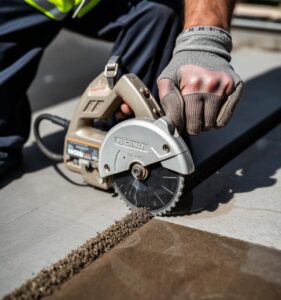
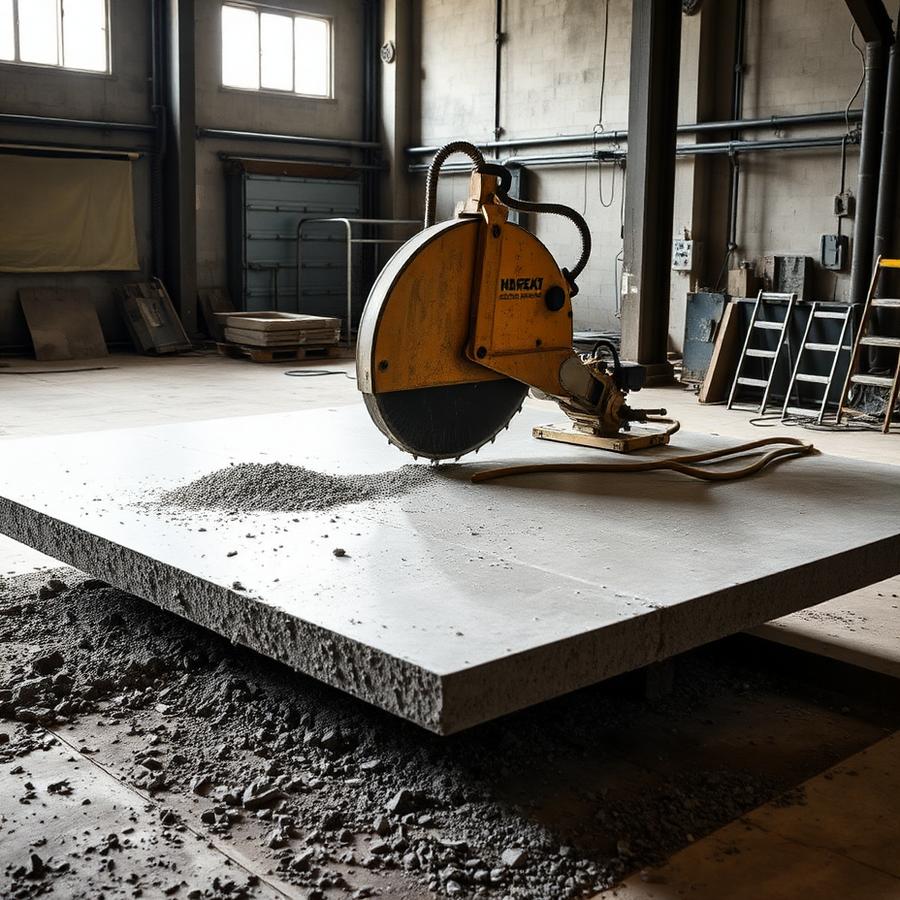
Slab sawing is a concrete cutting method used to make straight cuts through horizontal concrete surfaces. A specialised saw fitted with a diamond blade is guided along a predetermined line, gradually cutting through the slab to the required depth.
The technique is often used on concrete floors, pavements, roads, footpaths and other flat surfaces. Depending on the equipment and project, the cut can be made to a specific depth rather than removing the entire slab.
This makes slab sawing particularly useful when only a defined section of concrete needs to be opened. The remaining slab can stay in place while the cut section is removed separately.
When Are Slab Sawing Services Needed?
There is no single type of project that calls for slab sawing. The method is useful whenever a controlled cut is needed through a concrete floor or other horizontal surface.
A builder may need to open a floor for plumbing. A civil contractor might need to cut an existing pavement before excavation. A commercial property may require sections of flooring to be removed for new services.
Some common applications include:
- Cutting concrete floors for plumbing and drainage
- Creating trenches for electrical services
- Removing sections of road or pavement
- Preparing concrete for demolition
- Cutting around damaged sections of slab
- Creating openings for renovation work
- Making expansion or construction joints
- Preparing floors for new building services
The advantage is that the cutting follows a planned line. That gives the project team more control over exactly where the concrete is removed.
How Does Concrete Slab Sawing Work?
Before cutting begins, the required cutting line and depth are established. The operator then positions the saw and checks that the surrounding work area is suitable.
A diamond blade is lowered into the concrete and the saw moves steadily along the marked line. Water may be introduced during wet cutting to cool the blade and help control dust.
The blade is not simply forced through the slab as quickly as possible. Cutting speed and depth need to suit the concrete, blade and equipment. Rushing the process can affect both the finish and the performance of the cutting equipment.
Once the cut is complete, the separated section can be removed using the appropriate equipment for the project.
Why Diamond Blades Are Used
Concrete is an abrasive material, and ordinary cutting blades would wear quickly. Diamond segments provide the hardness needed to cut through concrete efficiently.
Diamond cutting also allows the operator to make a relatively clean and controlled cut. This is useful when the edge of the remaining slab needs to be kept intact.
The blade still needs to be matched to the material. Plain concrete, heavily reinforced concrete and other surfaces can behave differently during cutting, so the equipment should be selected according to the job rather than using the same setup for every project.
Slab Sawing vs Jackhammering
Both methods can remove concrete, but they serve different purposes.
A jackhammer breaks concrete into pieces. That can be useful during demolition when the concrete is going to be removed anyway. Slab sawing, on the other hand, is generally used when defined cutting lines are required before the concrete is removed.
If a contractor needs to cut a straight trench through a floor, for example, sawing can establish the edges before the central section is broken out. This reduces the amount of unnecessary damage outside the work zone.
For renovation projects, this distinction matters. There is often no reason to disturb a larger area of an existing floor when only a narrow section needs to be opened.
How Deep Can Concrete Slabs Be Cut?
The maximum practical cutting depth depends on the saw, blade diameter, concrete thickness and project conditions. Not every slab requires a full-depth cut.
In some jobs, a partial-depth cut is enough. In others, the blade needs to pass completely through the slab so a section can be removed.
The required depth should be established before work starts. It is also important to know what lies below the slab because cutting completely through concrete can expose soil, reinforcement, services or other construction elements.
A contractor can select equipment based on the required depth rather than trying to make the decision after cutting has already started.
What Is the Difference Between Floor Sawing and Other Concrete Cutting?
Floor sawing is designed primarily for horizontal surfaces. The saw travels across the slab while the blade cuts downward.
Wall sawing, by comparison, is used on vertical or inclined surfaces and normally involves equipment fixed to the wall. Core drilling creates circular openings rather than long straight cuts.
Understanding the difference helps when planning a project. If a contractor needs a long straight opening through a concrete floor, slab sawing services are generally more appropriate than using a core drill repeatedly.
The method should always follow the shape and purpose of the cut.
Planning a Slab Cutting Job
Good preparation can make a noticeable difference to the final result. The cutting line should be confirmed before the equipment arrives, and the required depth should be agreed with the contractor or following trade.
The team should also consider what is underneath the slab. Existing pipes, electrical services, reinforcement and other concealed elements can change the way the job needs to be approached.
Access matters too. A large saw needs enough room to operate and move along the planned cutting line. In a tight commercial or residential site, equipment selection may need to take the available space into account.
Reinforced Concrete Slab Cutting
Reinforcement adds strength to concrete, but it can make cutting more demanding. Steel reinforcement may be encountered as the blade moves through the slab.
The presence and location of reinforcement should be considered before cutting. Where structural information is available, it should be reviewed as part of the planning process.
This is particularly important when the slab is part of a structural system. Removing concrete without understanding its purpose can have consequences beyond the immediate cutting area.
A professional contractor should therefore work from the project requirements and coordinate with the relevant builder or engineer where structural considerations apply.
Managing Water During Wet Cutting
Wet cutting is commonly used when working with concrete. Water helps cool the blade and can reduce the amount of dust produced during cutting.
There is another side to using water, though. Run-off needs to be controlled so that slurry does not spread into drains, finished areas or other parts of the site.
The work area should therefore be prepared before cutting begins. Depending on the location, barriers, collection methods or other controls may be required to keep water and concrete slurry contained.
A clean site is not just about appearance. It also makes the job safer and easier for everyone working around the cutting area.
Concrete Cutting and Silica Dust
Concrete contains crystalline silica, and cutting it can generate respirable silica dust. Safe Work Australia identifies concrete cutting as one of the construction activities that can generate silica dust, particularly where dry cutting methods are used.
This is one reason dust control should be considered before the work begins. Depending on the job, controls can include wet cutting, dust extraction, isolation and appropriate respiratory protection.
Safe Work Australia states that businesses must manage risks associated with respirable crystalline silica and keep exposure below the applicable workplace exposure standard.
For contractors and site managers, this means concrete cutting should be treated as a planned work activity rather than simply turning up with a saw and starting the job.
Why Accurate Slab Cutting Matters
A straight cut might not sound complicated, but accuracy can affect everything that happens afterwards.
If a trench is wider than necessary, more concrete has to be removed. If the cut is in the wrong position, plumbing or electrical work may need to be adjusted. If the edges are irregular, additional finishing work can be required.
Accurate concrete slab cutting helps keep the opening close to the dimensions specified for the project. This can make the following excavation, installation or repair work easier.
It also means that areas of the slab that do not need to be removed can remain undisturbed.
| Project Type | Why Slab Sawing Is Useful | Typical Cutting Requirement | Main Consideration |
|---|---|---|---|
| Plumbing installation | Creates a defined trench | Straight floor cut | Required trench width |
| Drainage work | Opens concrete above service routes | Deep linear cut | Existing underground services |
| Electrical installation | Provides a route for conduits | Narrow floor cut | Service positioning |
| Road repairs | Separates damaged sections | Full-depth pavement cut | Traffic and access |
| Commercial renovation | Limits unnecessary floor damage | Planned sections | Working around occupants |
| Concrete demolition | Defines removal areas | Multiple straight cuts | Removal sequence |
| Expansion joints | Creates controlled joint lines | Specified depth | Joint location |
| Reinforced slab work | Allows controlled removal | Depth-specific cutting | Reinforcement and structure |
Slab Sawing for Plumbing and Drainage
Plumbing work is one of the more familiar applications for slab sawing services. When new drainage or pipework needs to be installed below an existing concrete floor, a narrow section of the slab may need to be removed.
The first cut establishes the edges of the section. Once the concrete has been removed, excavation can continue to the required depth for the new pipework.
After the plumbing work is completed, the trench can be prepared for reinstatement. Because the original opening was cut along defined lines, repairing the floor can be more straightforward than dealing with an irregular area created by uncontrolled breaking.
Slab Sawing for Electrical Services
Electrical contractors sometimes need trenches through concrete floors for conduits and service routes. The width and depth will depend on the design of the installation.
A saw-cut trench provides a predictable path for the work. This is particularly useful in commercial premises where the floor may need to remain intact outside the service route.
Planning the cut with the electrician or builder beforehand helps ensure that the opening is wide enough for the installation without removing more concrete than necessary.
Road and Pavement Slab Cutting
Slab sawing is not limited to indoor floors. It is also used for roads, concrete pavements and similar surfaces.
When a section of pavement needs to be repaired or removed, straight cuts can separate the affected area from the surrounding concrete. This makes the repair boundary easier to define.
The cutting plan should account for traffic management, access, pavement thickness and the equipment needed to remove the cut section. For public or high-traffic areas, site planning is particularly important.
Cutting Concrete Without Creating Unnecessary Damage
One of the main reasons for using a saw rather than simply breaking the slab is control.
A saw follows a defined path. That does not mean the surrounding concrete can never crack or become damaged, but the process is far more deliberate than attacking the surface with heavy impact tools.
For renovation work, this can be especially valuable. Existing flooring, walls and finished surfaces may be kept intact while only the section needed for the project is disturbed.
What Affects the Cost of Slab Sawing?
There is no single price for slab sawing services because every job is different.
The cutting depth, total length, concrete thickness, reinforcement, site access and number of cuts can all affect the amount of work involved. Water management, traffic control and removal of the cut concrete may also need to be considered.
A clear description of the project makes quoting easier. Providing measurements, photographs and information about the slab can help the contractor understand what will be required before visiting the site.
For larger projects, an on-site assessment is often the better option because conditions are not always obvious from drawings alone.
When Should You Use Professional Slab Sawing Services?
A specialist is worth considering whenever the concrete is thick, reinforced, difficult to access or part of a larger construction project.
Professional equipment is designed to handle demanding cutting conditions, and an experienced operator can adjust the approach when the slab does not behave exactly as expected.
There is also the issue of dust, water, equipment handling and site safety. These are not things that should be overlooked simply because the actual cut may only take a short time.
For commercial and civil projects, professional slab cutting can also help keep the work moving according to the planned construction sequence.
Choosing a Concrete Cutting Contractor
When comparing concrete cutting services, look at more than the quoted price.
Ask whether the contractor has experience with the type of slab involved and whether they can handle the required cutting depth. It is also useful to discuss access, water management, reinforcement and removal of the cut concrete before the work begins.
A good contractor should be comfortable discussing these practical details. They should understand that the saw cut is only one part of the job and that the surrounding site needs to be managed properly.
Clear communication at the start can prevent delays once cutting begins.
Preparing the Site Before the Saw Arrives
Make sure the cutting area is accessible and that the required cutting lines are clearly identified. Remove furniture, equipment or other obstacles where possible.
Confirm the measurements with the trade that will use the opening. A plumber, electrician or builder may have specific requirements for the width, depth or position of the cut.
If plans show underground or embedded services, have that information available. The more the operator knows before starting, the easier it is to plan the work.
It is also worth deciding beforehand how the cut concrete will be lifted, moved and disposed of. Leaving that decision until the slab is already open can slow the project down.
Get the Right Slab Sawing Solution
Concrete cutting is one of those jobs where the quality of the preparation can matter just as much as the equipment itself. A correctly positioned saw, suitable diamond blade and appropriate cutting depth can produce a clean opening without disturbing more of the slab than necessary.
Whether the project involves plumbing, drainage, electrical services, pavement repairs or commercial construction, slab sawing services provide a practical way to create controlled cuts through concrete.
If you are planning a project that requires concrete floor cutting, discuss the measurements, slab thickness and intended use of the opening with a specialist before work starts. This helps establish the right equipment and cutting method for the site.
For professional slab sawing, concrete cutting and related services, contact Rapid Sawing & Drilling to discuss your requirements and request a quote. You can explore the concrete cutting services available or use the contact page to make an enquiry.
Frequently Asked Questions
1. What are slab sawing services used for?
Slab sawing services are used to make controlled cuts through horizontal concrete surfaces. Common applications include plumbing trenches, drainage work, electrical service routes, road repairs and concrete removal.
2. What is the difference between slab sawing and concrete breaking?
Slab sawing creates planned cuts along defined lines, while concrete breaking uses impact to break the material into pieces. Sawing is useful when the size and location of the opening need to be controlled.
3. Can slab sawing cut through reinforced concrete?
Yes, specialist equipment can cut reinforced concrete. However, the reinforcement, slab thickness and structural purpose of the concrete should be considered before cutting begins.
4. Does slab sawing create concrete dust?
Concrete cutting can generate respirable crystalline silica dust. Wet cutting and other suitable controls can help reduce exposure. Safe Work Australia specifically identifies concrete cutting as an activity that can generate silica dust.
5. How much do slab sawing services cost?
The price depends on factors such as cutting length, slab thickness, required depth, reinforcement, access and site conditions. A contractor can provide a more accurate estimate after reviewing the project requirements.